



Please login to view the price
login
anti-aging

Rough Skin

↑ Collagen

Even Skin Tone

Firming
Layer-controlled superficial, medium depth to deep peel with keratocoagulation and textural refinement
The TCA Peel is a medical-grade chemical resurfacing treatment formulated to induce controlled protein coagulation within the epidermis and superficial dermis. Trichloroacetic acid (TCA) works through precise chemical cauterisation, stimulating epidermal renewal and dermal remodelling processes that support collagen synthesis and structural skin regeneration. This can visibly improve pigmentation irregularities, acne scarring, textural concerns, and signs of photoaging.
Available in multiple strengths, treatment depth can be carefully customised according to individual skin needs and clinical goals. TCA peels are particularly effective for advanced correction where deeper collagen stimulation and comprehensive skin renewal are required.
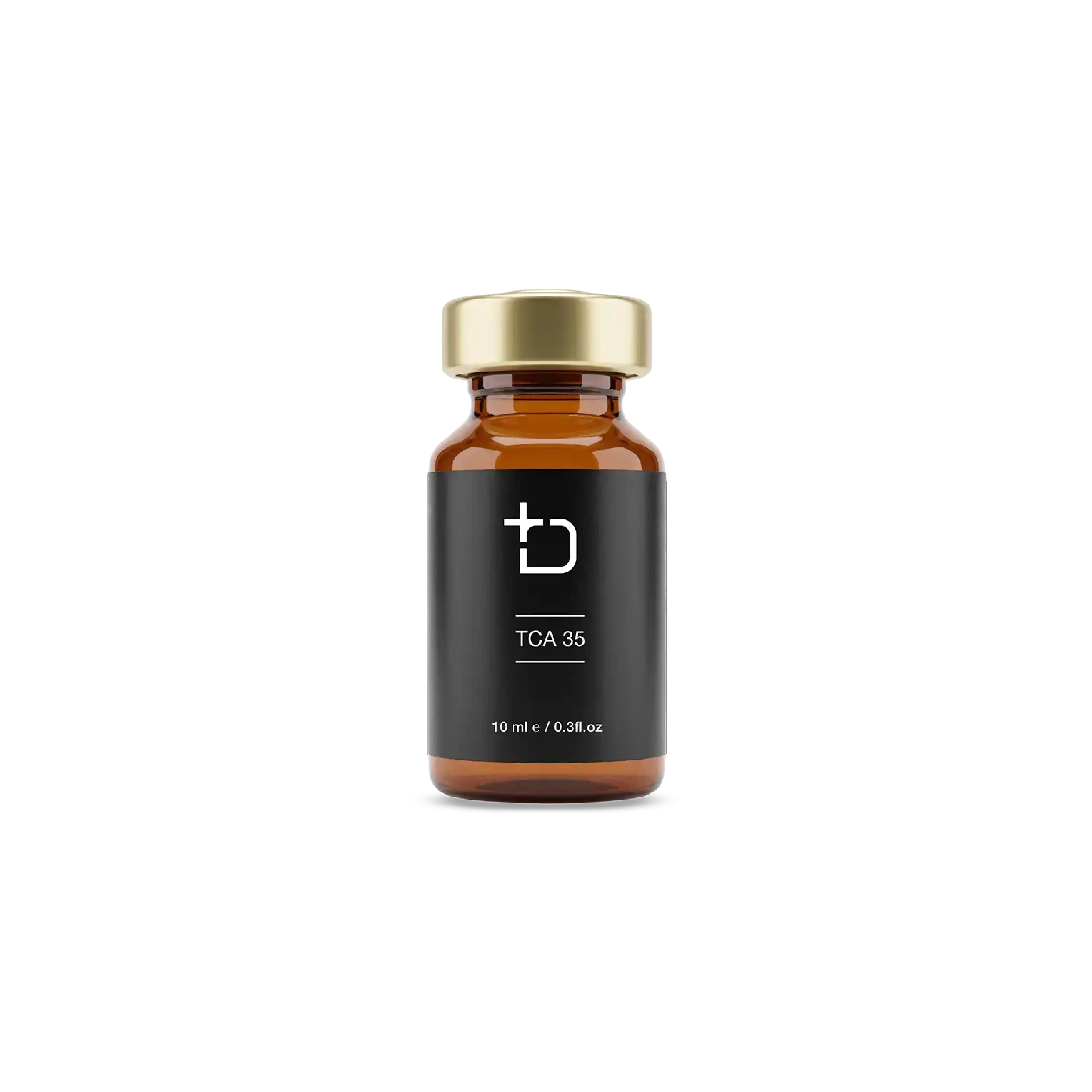
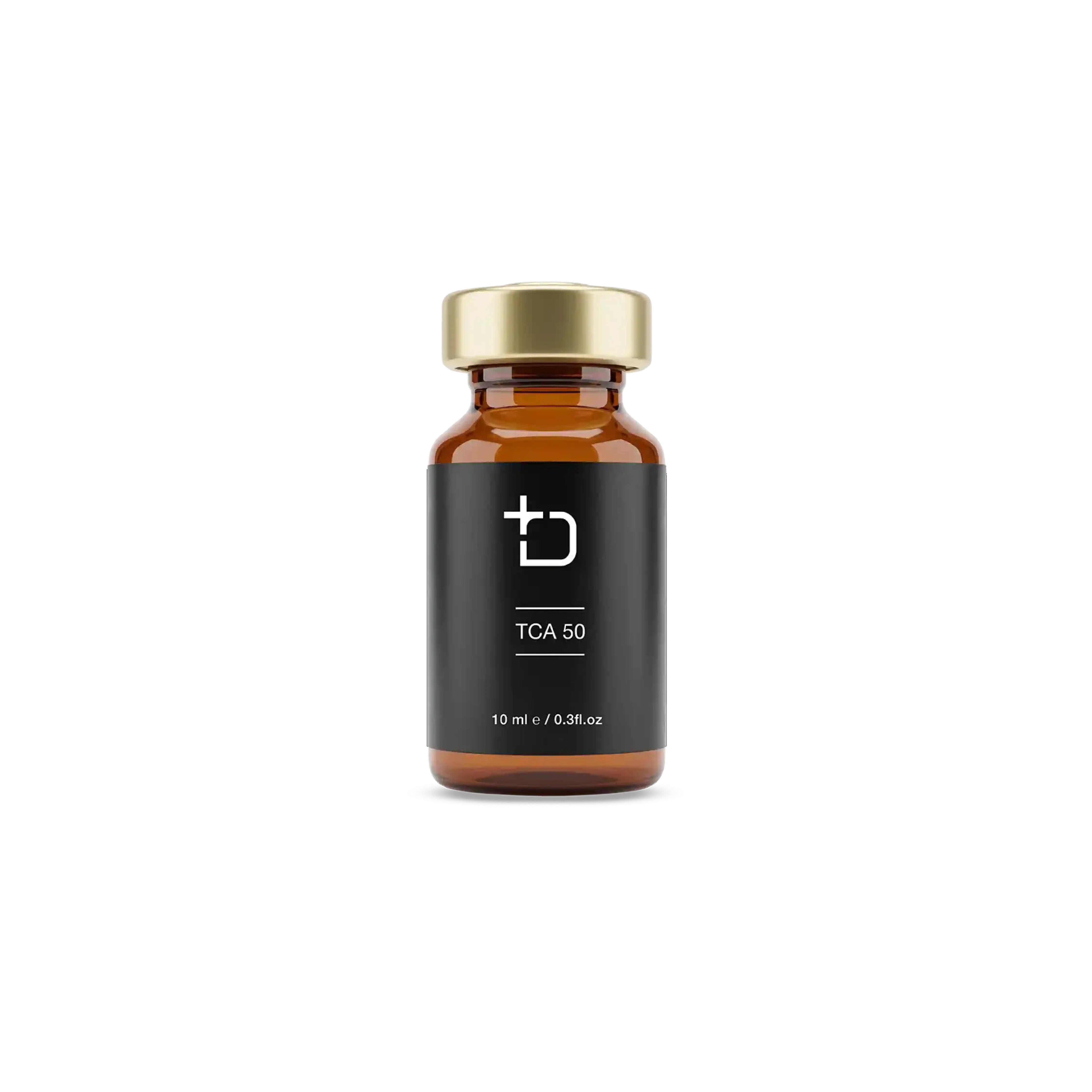
PLEASE NOTE: The 35% and 50% TCA Chemical Peels are intended for professional medical use and are supplied exclusively to registered medical practitioners.

Trichloroacetic Acid: 10% | 15% | 20% | 25% | 35% | 50%
Trichloroacetic Acid (TCA) is a medical-grade chemical cauterant widely used in dermatology for controlled skin resurfacing and structural rejuvenation. Unlike alpha and beta hydroxy acids that primarily act through pH-dependent exfoliation, TCA works by inducing precise protein coagulation within the epidermis and superficial dermis. This controlled chemical injury initiates a structured wound-healing cascade, stimulating epidermal regeneration and dermal remodeling.
TCA denatures keratin and structural proteins within the skin, leading to predictable desquamation and re-epithelialisation. The regeneration process results in the formation of newly organised epidermal layers with improved tone uniformity and surface smoothness. At appropriate concentrations, TCA penetrates into the papillary dermis, where it activates fibroblasts and stimulates collagen and elastin synthesis. This dermal remodeling contributes to improved skin firmness, reduction in fine lines, and visible refinement of acne scarring.
What distinguishes TCA from superficial exfoliating acids is its ability to produce true structural correction rather than temporary surface renewal. By strengthening the dermal–epidermal junction and promoting collagen regeneration, TCA improves not only pigmentation irregularities and textural concerns but also the underlying architecture of photoaged skin.
TCA’s clinical efficacy in treating photodamage, dyschromia, actinic keratoses, and atrophic acne scars is well established in dermatologic literature. Its depth-dependent action allows practitioners to customise treatment intensity according to clinical indication, making it one of the most versatile and respected agents in corrective chemical resurfacing.
Physiological Effects
- Protein Coagulation: TCA induces controlled coagulation of epidermal and dermal proteins, leading to predictable tissue restructuring and initiation of the wound-healing cascade.
- Controlled Chemical Injury: The acid produces a depth-dependent chemical cauterisation effect that stimulates regenerative processes within the skin rather than superficial exfoliation alone.
- Epidermal Regeneration: Following protein coagulation, re-epithelialisation occurs through basal keratinocyte proliferation, resulting in newly formed epidermal layers with improved texture and tone uniformity.
- Dermal Collagen Stimulation: TCA activates fibroblast activity within the papillary dermis, increasing collagen and elastin synthesis and contributing to improved skin firmness and structural integrity.
- Dermal–Epidermal Junction Strengthening: By promoting collagen remodeling, TCA enhances the structural support between the dermis and epidermis, improving skin resilience and reducing visible photoaging.
- Matrix Remodeling: TCA stimulates reorganisation of collagen fibres and extracellular matrix components, leading to refinement of acne scars and textural irregularities.
- Pigment Normalisation: Through structured epidermal renewal and regeneration, TCA improves dyschromia and uneven pigmentation by replacing photodamaged tissue with newly regenerated skin.
Managing Dermatological Conditions
- Photoaging: TCA is widely used in the treatment of photoaged skin, improving fine lines, uneven texture, and photodamage through controlled dermal remodeling and collagen stimulation.
- Hyperpigmentation & Dyschromia: It effectively improves melasma, post-inflammatory hyperpigmentation, and uneven skin tone by inducing structured epidermal regeneration and replacement of melanin-laden keratinocytes.
- Acne Scarring: TCA is highly effective in treating atrophic acne scars by stimulating collagen synthesis and dermal matrix remodeling. The TCA CROSS technique is particularly beneficial for ice-pick scars.
- Actinic Keratoses: Medium-depth TCA peels are used in dermatologic practice to treat actinic keratoses by removing dysplastic epidermal cells and promoting regeneration of healthier tissue.
- Textural Irregularities: TCA improves rough, thickened, or uneven skin through controlled resurfacing and structural reorganisation of epidermal and dermal layers.
- Superficial Rhytides: Through collagen stimulation and dermal remodeling, TCA reduces the appearance of fine lines and superficial wrinkles.
References
- Monheit, G. D., & Chastain, M. A. (2006). Chemical peels. Facial Plastic Surgery Clinics of North America, 14(1), 1–13.
- Khunger, N. (2008). Standard guidelines of care for chemical peels. Indian Journal of Dermatology, Venereology and Leprology, 74(Suppl), S5–S12.
- Sarkar, R., Garg, S., & Bansal, S. (2017). Chemical peels in melasma: A review with consensus recommendations by Indian Pigmentary Expert Group. Indian Journal of Dermatology, 62(4), 357–371.
- Fabbrocini, G., De Vita, V., Pastore, F., Panariello, L., Fardella, N., Sepede, R., & Monfrecola, G. (2009). Chemical peels for acne and acne scars. Clinical, Cosmetic and Investigational Dermatology, 2, 75–83.
- Brody, H. J. (2000). Complications of chemical peeling. Journal of Dermatologic Surgery, 26(3), 255–262.
- Sitohang, I. B. S., Jusuf, N. K., & Putra, I. B. (2021). Trichloroacetic acid peeling for treating photoaging: A review of clinical evidence. Dermatology Research and Practice, 2021, 1–8.
SHIPPING
- Shipping Guarantee: Guiding you to healthy skin isn’t only about our products; it's also about getting them to you as swiftly as the science behind them. That's why Dermal Health offers a shipping guarantee you can rely on.
- Where We Ship From: Orders are dispatched from our facilities in Pretoria.
- Who We Ship With: We trust only well-known, popular, and dependable courier services with your packages.
- When You'll Get It: Expect confident skin soon! Shipping addresses in Pretoria and Johannesburg will enjoy delivery from same-day to 2 business days. Shipping addresses further from Pretoria may expect delivery within 1-4 business days, depending on the service you select during checkout. Your estimated delivery date will reflect during checkout so that you can mark your calendar.
- Tracking Your Order: Eager to start your DermExcel journey? We don't blame you! You'll receive a tracking number after you place your order so that you can follow your package.
For any shipping inquiries, our customer service team is ready to assist.
RETURNS
180-Day Satisfaction Guarantee
Want to log a return? We’ve got you.
You’re welcome to return any product within 180 days of purchase—even if it’s not defective—as long as it’s sealed, unused, in its original packaging, and still within six months of its labeled expiration date (located on the bottom of the product). We get it: sometimes things change.
For non-defective returns, courier costs will be your responsibility.
If you believe a product is defective, please provide a brief explanation so our team can properly assess and process your claim.
Just complete our quick Return Form and we’ll take it from there.
Healthy Skin Isn’t Complicated. Neither Is Our Return Policy.
Visit our Return Policy page or contact our friendly support team if you need assistance.
SECURE PAYMENT
Dermal Health Science 30-Day Confidence Guarantee: We are passionate about guiding you to healthy skin through medical science. We believe in the quality and effectiveness of our products so much that we offer a 30-Day Confidence Guarantee. If you're unsatisfied with your purchase, simply return it within 30 days for a full refund.
Healthy Skin Is Not Complicated and neither is our return policy. Please visit our detailed return policy or contact our friendly customer service team for more information.
Feel as confident in us as we want you to feel in your skin.
TCA Peel
mode of action
Aging & Fine Lines
- Trichloroacetic acid induces controlled protein coagulation within the epidermis and superficial dermis, initiating a structured wound-healing response.
- This activates fibroblast activity and stimulates the synthesis of collagen types I and III, strengthening the dermal matrix.
- It enhances elastin and glycosaminoglycan production, contributing to improved firmness and elasticity.
- It promotes dermal remodeling, reducing the visible appearance of fine lines and superficial wrinkles.
Pigmentation
- Trichloroacetic acid induces controlled protein coagulation within the epidermis, facilitating the removal of melanin-containing keratinocytes and superficial dyschromia.
- It stimulates complete re-epithelialisation with regeneration of newly formed keratinocytes, contributing to improved pigment distribution and tone uniformity.
- This action activates dermal remodeling and collagen synthesis, strengthening structural support at the dermal–epidermal junction and contributing to more regulated melanocyte activity.
- Reduces chronic photodamage-driven inflammatory signalling, which plays a role in melanocyte stimulation and persistent hyperpigmentation.
- Promotes replacement of photodamaged tissue with structurally regenerated skin, supporting longer-term pigment correction.
Acne Scarring & Textural Irregularities
- Trichloroacetic acid induces controlled dermal injury extending into the papillary dermis (depending on concentration), stimulating collagen neosynthesis.
- Enhances dermal matrix remodeling, improving atrophic scar depth and skin surface irregularities.
- Promotes reorganisation of collagen bundles, leading to improved scar contour and texture refinement.
- In focal applications (e.g., CROSS technique), it induces localised collagen deposition within ice-pick scars.