

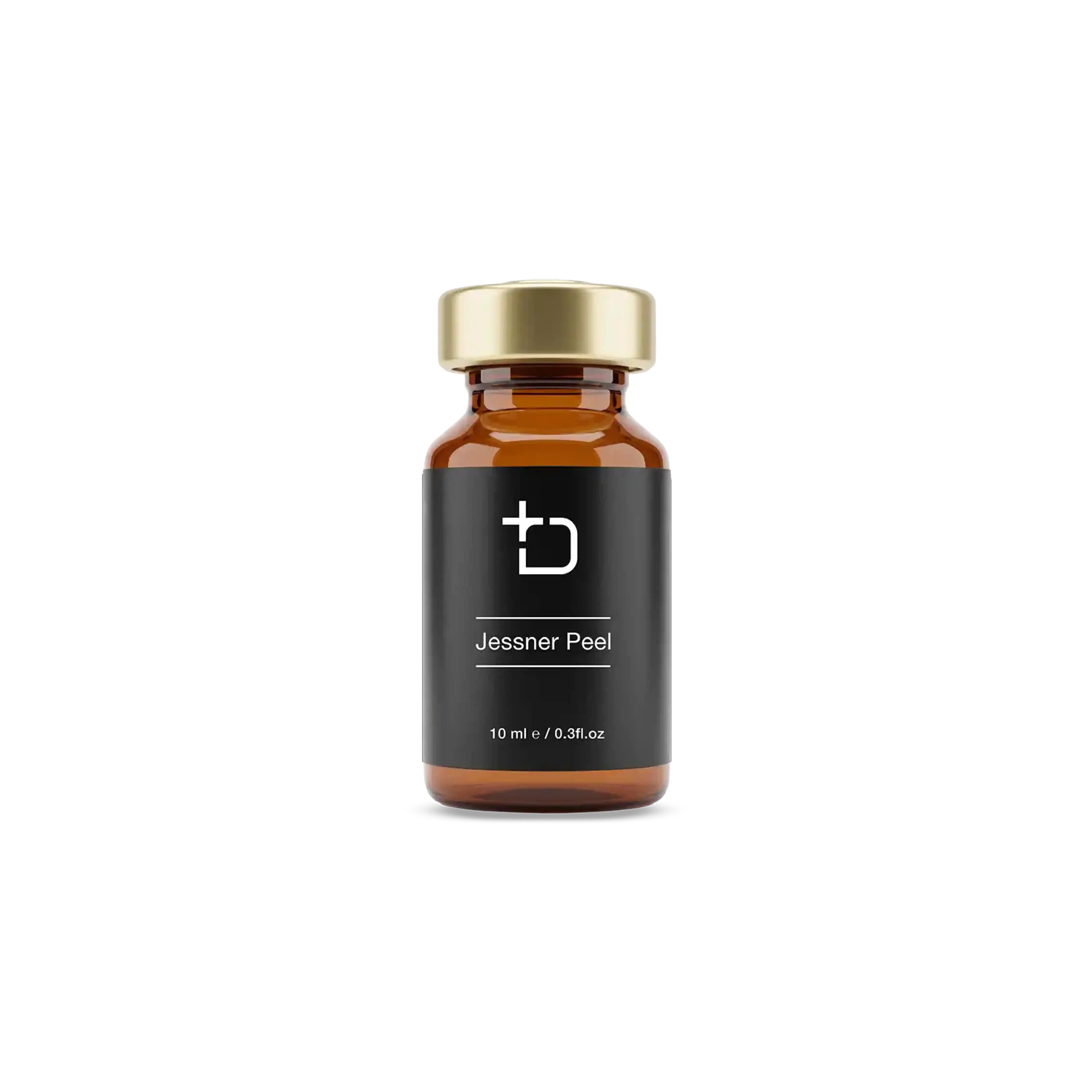


Intensive Dermal Corrective Peel
Please login to view the price
loginSIZE: 10 mL

anti-aging

Even Skin Tone

Rough Skin

↓ Sebum

Unclog Pores
Layer-controlled superficial to medium-depth peel with keratolytic, comedolytic, and pigment-regulating action.
The Jessner Peel is indicated for skin presenting with breakouts, congestion, excess oiliness, uneven skin tone, dullness, and early signs of photoaging, where underlying factors such as dead cell accumulation, slowed epidermal turnover, and follicular blockage contribute to visible skin irregularities. Formulated with clinically effective keratolytic acids, it works to accelerate cellular renewal and loosen corneocyte cohesion, enabling controlled exfoliation while supporting improved pore clarity, smoother texture, and the gradual improvement of superficial pigmentation irregularities.
With predictable superficial penetration and the ability to be layered, treatment intensity can be customised according to individual skin needs and therapeutic goals, making it a versatile option within professional protocols focused on skin clarity, refinement, and overall rejuvenation.

Salicylic acid
Salicylic acid, a renowned beta hydroxy acid (BHA), stands as a cornerstone in the realm of dermatology and skincare due to its exceptional keratolytic and comedolytic properties. It has a unique ability to penetrate oil-laden hair follicle pores, making it particularly effective in treating acne-prone and oily skin types.
Salicylic acid works by dissolving the type of skin debris that clogs pores and causes acne, namely sebum and dead skin cells. It's a mild anti-bacterial- and a powerful anti-inflammatory agent, which help to reduce the redness and swelling associated with breakouts.
What sets salicylic acid apart in dermatological treatments is its ability to exfoliate the skin not just on the surface, but within the pores themselves. This is due to its oil-soluble nature, allowing it to penetrate deep into the pores and dissolve the keratin plugs that lead to blackheads and whiteheads.
Furthermore, salicylic acid also has the capacity to adjust the pH of the skin, creating an environment less favorable for the growth of acne-causing bacteria. Salicylic acid's efficacy in treating various skin conditions, particularly acne, has been extensively documented in the scientific literature. Studies have consistently shown its ability to reduce acne lesions, both in terms of count and severity. Additionally, salicylic acid is highly recommended for its effectiveness in treating other skin conditions, such as psoriasis and dandruff, due to its ability to soften and remove scales and flakes from the skin.
Physiological Effects of Salicylic Acid
- Keratolytic Action: Salicylic acid is known for its ability to exfoliate the skin by dissolving the intercellular 'glue' that holds skin cells together, helping to remove dead skin cells and unclog pores.
- Comedolytic Effect: It is particularly effective in reducing comedones (blackheads and whiteheads) by unclogging pores and preventing the formation of new comedones.
- Anti-inflammatory Properties: Salicylic acid reduces inflammation, which is beneficial in treating acne and other inflammatory skin conditions.
- Sebum Regulation: It helps to regulate oil production, making it a valuable ingredient for managing oily and acne-prone skin.
- Penetration Enhancement: Due to its lipophilic nature, it can penetrate sebum-filled follicles, making it effective in treating acne located deep within the pores.
Role in Managing Dermatological Conditions
- Acne Vulgaris: Salicylic acid is a cornerstone in acne treatment, effective in both preventing and treating existing acne lesions.
- Psoriasis: Its keratolytic properties make it useful in softening and removing scales associated with psoriasis.
- Warts: Salicylic acid is commonly used in the treatment of warts due to its ability to exfoliate and remove the thickened skin.
- Seborrheic Dermatitis: It helps in managing seborrheic dermatitis by reducing scaling and redness.
- Keratosis Pilaris: Salicylic acid can aid in smoothing the rough bumps associated with keratosis pilaris.
References
- Zaenglein, A. L., Pathy, A. L., Schlosser, B. J., Alikhan, A., Baldwin, H. E., Berson, D. S., & Thiboutot, D. M. (2016). Guidelines of care for the management of acne vulgaris. Journal of the American Academy of Dermatology, 74(5), 945-973.e33.
- Kornhauser, A., Coelho, S. G., & Hearing, V. J. (2010). Applications of hydroxy acids: classification, mechanisms, and photoactivity. Clinical, cosmetic and investigational dermatology, 3, 135.
- Zander, E., & Weisman, S. (1992). Treatment of acne vulgaris with salicylic acid pads. Clinical Therapeutics.
- Gupta, A. K., & Nicol, K. (2004). The use of sulfur in dermatology. Journal of Drugs in Dermatology.

Lactic acid
Lactic acid, a member of the alpha hydroxy acid (AHA) family, is a well-regarded ingredient in the field of dermatology and skincare for its exfoliating and moisturizing properties. Naturally occurring in sour milk and other fermented products, lactic acid is also produced in the human body and plays a role in various metabolic processes.
In skincare, lactic acid is primarily known for its ability to exfoliate the skin gently. By breaking down the bonds that hold dead skin cells together on the skin's surface, lactic acid helps to promote the shedding of these cells, revealing fresher, brighter skin underneath. This exfoliation process improves skin texture and tone and stimulates cell renewal.
One key advantage of lactic acid over other AHAs is its moisturizing capability. Lactic acid helps increase the skin's natural moisturizing factors (NMF), essential for keeping the skin hydrated. Its unique ability to draw moisture into the skin is particularly beneficial for treating dry and dehydrated skin conditions.
Physiological Effects
- Exfoliation: A gentle exfoliant that removes dead skin cells from the skin's surface, promoting smooth skin.
- Moisture Retention: It is a humectant that helps the skin retain moisture, improving hydration and reducing dryness.
- Collagen Stimulation: Lactic acid can stimulate collagen production in the deeper layers of the skin, aiding in skin firmness and reducing the appearance of fine lines and wrinkles.
- Skin Brightening: It helps lighten dark spots and even out skin tone, effectively treating hyperpigmentation.
- pH Balancing: Lactic acid can help balance the skin's natural pH levels, which is beneficial for maintaining a healthy skin barrier.
Managing Dermatological Conditions
- Aging Skin: Lactic acid's collagen-stimulating and exfoliating properties make it effective in anti-aging treatments, reducing signs of aging like wrinkles and age spots.
- Acne-Prone Skin: By unclogging pores and removing dead skin cells, lactic acid can help reduce acne breakouts.
- Dry Skin (Xerosis): Its humectant properties are beneficial in hydrating and relieving dry skin.
- Hyperpigmentation: Lactic acid treats hyperpigmentation issues, including melasma and sun damage.
- Keratosis Pilaris: It can help manage keratosis pilaris by exfoliating the excess keratin that blocks hair follicles.
References
- Smith, W. P. (1996). Epidermal and dermal effects of topical lactic acid. Journal of the American Academy of Dermatology.
- Kornhauser, A., Coelho, S. G., & Hearing, V. J. (2010). Applications of hydroxy acids: classification, mechanisms, and photoactivity. Clinical, Cosmetic and Investigational Dermatology.
- Stiller, M. J., et al. (1996). Topical 8% glycolic acid and 8% L-lactic acid creams for the treatment of photodamaged skin. A double-blind vehicle-controlled clinical trial. Archives of Dermatology.
- Rawlings, A. V., Davies, A., Carlomusto, M., Pillai, S., Zhang, K., Kosturko, R., ... & Watson, D. (1996). Effect of lactic acid isomers on keratinocyte ceramide synthesis, stratum corneum lipid levels and stratum corneum barrier function. Archives of Dermatological Research, 288(7), 383-390.

Resorcinol
Resorcinol is an organic compound belonging to the phenol family and is widely used in dermatology for its exfoliating, antiseptic, and skin-brightening properties. It has been a key ingredient in various topical treatments, including chemical peels, acne formulations, and hyperpigmentation therapies, due to its ability to resurface and purify the skin effectively.
Resorcinol functions as a keratolytic agent, meaning it helps break down and remove the outer layers of dead skin cells. By disrupting protein bonds within the skin’s stratum corneum, resorcinol promotes exfoliation, making it beneficial for conditions characterized by abnormal skin cell buildup, such as acne, hyperpigmentation, and certain forms of dermatitis.
Unlike traditional alpha hydroxy acids (AHAs) or beta hydroxy acids (BHAs), resorcinol has additional antimicrobial and depigmenting effects, making it especially useful for acne-prone and hyperpigmented skin types.
Physiological Effects
- Exfoliation & Cell Turnover: By weakening the bonds between keratinocytes, resorcinol enhances skin desquamation, leading to smoother, brighter, and more even-toned skin.
- Sebum Regulation: It reduces excessive oil production, which helps manage acne and prevents clogged pores.
- Antimicrobial Properties: Resorcinol has mild antiseptic effects, making it effective against acne-causing bacteria and other microorganisms that contribute to skin infections.
- Depigmentation & Skin Brightening: By inhibiting tyrosinase, a key enzyme in melanin synthesis, resorcinol helps fade dark spots, melasma, and post-inflammatory hyperpigmentation (PIH).
- Anti-inflammatory Action: It calms redness and irritation, making it beneficial for inflammatory skin conditions.
SHIPPING
- Shipping Guarantee: Guiding you to healthy skin isn’t only about our products; it's also about getting them to you as swiftly as the science behind them. That's why Dermal Health offers a shipping guarantee you can rely on.
- Where We Ship From: Orders are dispatched from our facilities in Pretoria.
- Who We Ship With: We trust only well-known, popular, and dependable courier services with your packages.
- When You'll Get It: Expect confident skin soon! Shipping addresses in Pretoria and Johannesburg will enjoy delivery from same-day to 2 business days. Shipping addresses further from Pretoria may expect delivery within 1-4 business days, depending on the service you select during checkout. Your estimated delivery date will reflect during checkout so that you can mark your calendar.
- Tracking Your Order: Eager to start your DermExcel journey? We don't blame you! You'll receive a tracking number after you place your order so that you can follow your package.
For any shipping inquiries, our customer service team is ready to assist.
RETURNS
180-Day Satisfaction Guarantee
Want to log a return? We’ve got you.
You’re welcome to return any product within 180 days of purchase—even if it’s not defective—as long as it’s sealed, unused, in its original packaging, and still within six months of its labeled expiration date (located on the bottom of the product). We get it: sometimes things change.
For non-defective returns, courier costs will be your responsibility.
If you believe a product is defective, please provide a brief explanation so our team can properly assess and process your claim.
Just complete our quick Return Form and we’ll take it from there.
Healthy Skin Isn’t Complicated. Neither Is Our Return Policy.
Visit our Return Policy page or contact our friendly support team if you need assistance.
SECURE PAYMENT
Dermal Health Science 30-Day Confidence Guarantee: We are passionate about guiding you to healthy skin through medical science. We believe in the quality and effectiveness of our products so much that we offer a 30-Day Confidence Guarantee. If you're unsatisfied with your purchase, simply return it within 30 days for a full refund.
Healthy Skin Is Not Complicated and neither is our return policy. Please visit our detailed return policy or contact our friendly customer service team for more information.
Feel as confident in us as we want you to feel in your skin.
Jessner Peel
mode of action
Pigmentation Treatment
SALICYLIC ACID
- Lipophilic penetration into sebaceous follicles promotes keratolysis within the follicular infundibulum, improving exfoliation uniformity across the skin surface.
- Dissolves intercellular lipids and removes keratinous debris, reducing surface build-up that can contribute to uneven pigmentation.
- Enhances penetration consistency of co-applied peeling agents by reducing surface oil and follicular obstruction.
- Exhibits anti-inflammatory activity, helping to reduce inflammation-induced melanocyte stimulation associated with PIH.
______
LACTIC ACID
- Reduces corneocyte cohesion to promote controlled epidermal exfoliation and facilitate removal of melanin-laden keratinocytes.
- Accelerates epidermal turnover, supporting dispersion of existing pigment and gradual improvement in uneven skin tone.
- Its larger molecular size contributes to more superficial penetration compared with glycolic acid, which may reduce irritation potential an important factor as inflammation can stimulate melanocyte activity and worsen post-inflammatory hyperpigmentation (PIH).
______
RESORCINOL
- Acts as a keratolytic and protein-denaturing agent, accelerating epidermal desquamation and removal of pigmented keratinocytes.
- Demonstrates inhibitory effects on tyrosinase activity, contributing to modulation of melanin synthesis pathways.
- Supports gradual improvement in superficial hyperpigmentation and uneven skin tone through combined exfoliative and melanogenesis-modulating effects.
Aging & Fine Lines
SALICYLIC ACID
- Facilitates desquamation and removal of compact stratum corneum layers, improving skin smoothness and texture irregularities associated with photoaging.
- Lipophilic penetration enhances exfoliation uniformity across sebaceous areas, contributing to improved surface refinement and pore appearance.
- Exhibits anti-inflammatory activity, helping to reduce subclinical inflammation that contributes to collagen degradation and premature skin aging.
______
LACTIC ACID
- Promotes controlled epidermal exfoliation by reducing corneocyte cohesion, leading to accelerated cellular turnover and improvement in surface roughness associated with photodamage.
- Stimulates epidermal renewal processes that contribute to smoother skin texture and improved optical light reflection, reducing the visible appearance of fine lines.
- Supports dermal glycosaminoglycan production and collagen synthesis, contributing to gradual improvement in skin firmness and elasticity.
______
RESORCINOL
- Acts as a potent keratolytic and protein-denaturing agent, inducing controlled epidermal injury that accelerates cellular turnover and removal of photodamaged keratinocytes.
- Promotes epidermal regeneration processes that contribute to improved skin smoothness and refinement of superficial textural irregularities.
- Controlled chemical injury stimulates dermal repair mechanisms, including fibroblast activation and collagen remodeling, supporting gradual softening of fine lines and improvement in skin firmness.
Inflammation & Acne
SALICYLIC ACID
- Lipophilic beta-hydroxy acid penetrates into sebaceous follicles, dissolving intercellular lipids and promoting keratolysis within the pore.
- Exhibits comedolytic activity, helping to reduce microcomedones, blackheads, and whiteheads.
- Provides anti-inflammatory effects through inhibition of pro-inflammatory mediators, reducing erythema and irritation associated with inflammatory acne lesions.
- Supports reduction of follicular congestion, contributing to improved pore clarity and decreased lesion formation.
______
LACTIC ACID
- Promotes controlled exfoliation by reducing corneocyte cohesion, helping to prevent follicular plugging and comedone formation.
- Accelerates epidermal turnover, supporting normalisation of keratinocyte shedding within the follicular infundibulum.
______
RESORCINOL
- Acts as a keratolytic and protein-denaturing agent, promoting exfoliation and removal of follicular debris.
- Demonstrates antiseptic properties that help reduce microbial proliferation within the follicular environment.
- Accelerates epidermal turnover and desquamation, supporting improvement in both inflammatory and non-inflammatory acne lesions.
Sebum Regulation
SALICYLIC ACID
- Lipophilic beta-hydroxy acid penetrates into sebaceous follicles and dissolves intercellular lipids, directly reducing accumulated sebum within the pore.
- Helps loosen compacted oil and keratin debris, improving pore clarity and reducing the appearance of surface oiliness.
- Exhibits anti-inflammatory activity that may help normalise sebaceous activity associated with inflammatory skin conditions.
- Contributes to a less occlusive follicular environment, supporting improved sebum flow and reduced congestion.
______
LACTIC ACID
- Promotes normalisation of keratinocyte shedding within the follicular infundibulum, helping to reduce obstruction that contributes to sebum retention and congestion.
- Accelerates epidermal turnover, supporting improved movement of sebum to the skin surface and reducing the likelihood of pore blockage.
Dull & Lifeless Skin
SALICYLIC ACID
- Dissolves intercellular lipids and keratin debris, promoting removal of surface build-up that can impair skin clarity.
- Supports more uniform exfoliation across sebaceous areas, contributing to improved skin refinement and brightness.
- Assists in pore clearance, enhancing overall skin smoothness and visual radiance.
______
LACTIC ACID
- Promotes controlled exfoliation by reducing corneocyte cohesion, facilitating removal of accumulated surface cells and supporting a fresher epidermal appearance.
- Accelerates epidermal turnover, encouraging renewal of keratinocytes and improved skin luminosity.
- Enhances surface smoothness, contributing to improved optical light reflection and a more radiant appearance.
______
RESORCINOL
- Acts as a keratolytic and protein-denaturing agent, accelerating desquamation and renewal of the epidermal surface.
- Promotes removal of compacted stratum corneum layers, supporting improved clarity and brightness.
- Enhances overall resurfacing effects, contributing to a smoother, more revitalised skin appearance.