

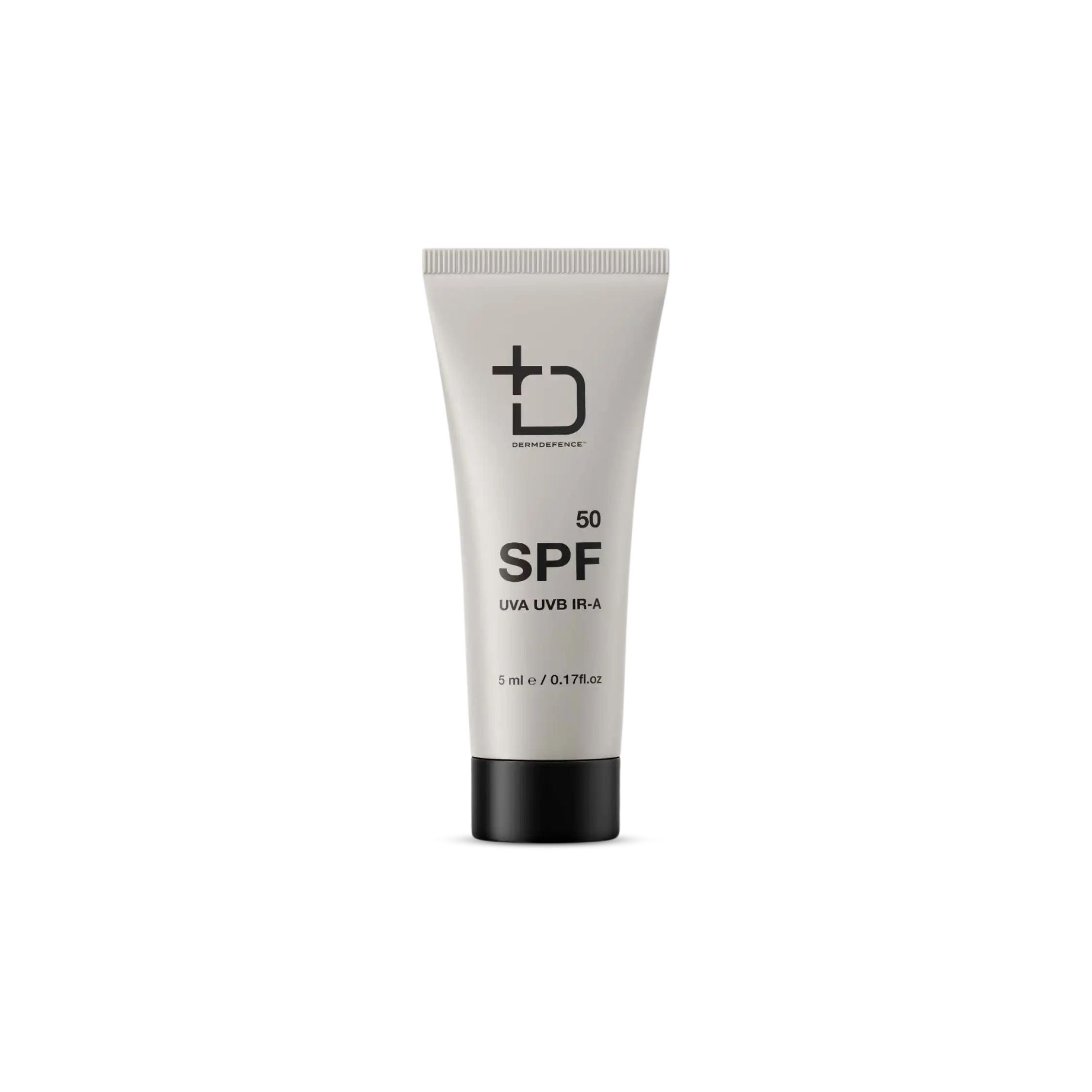
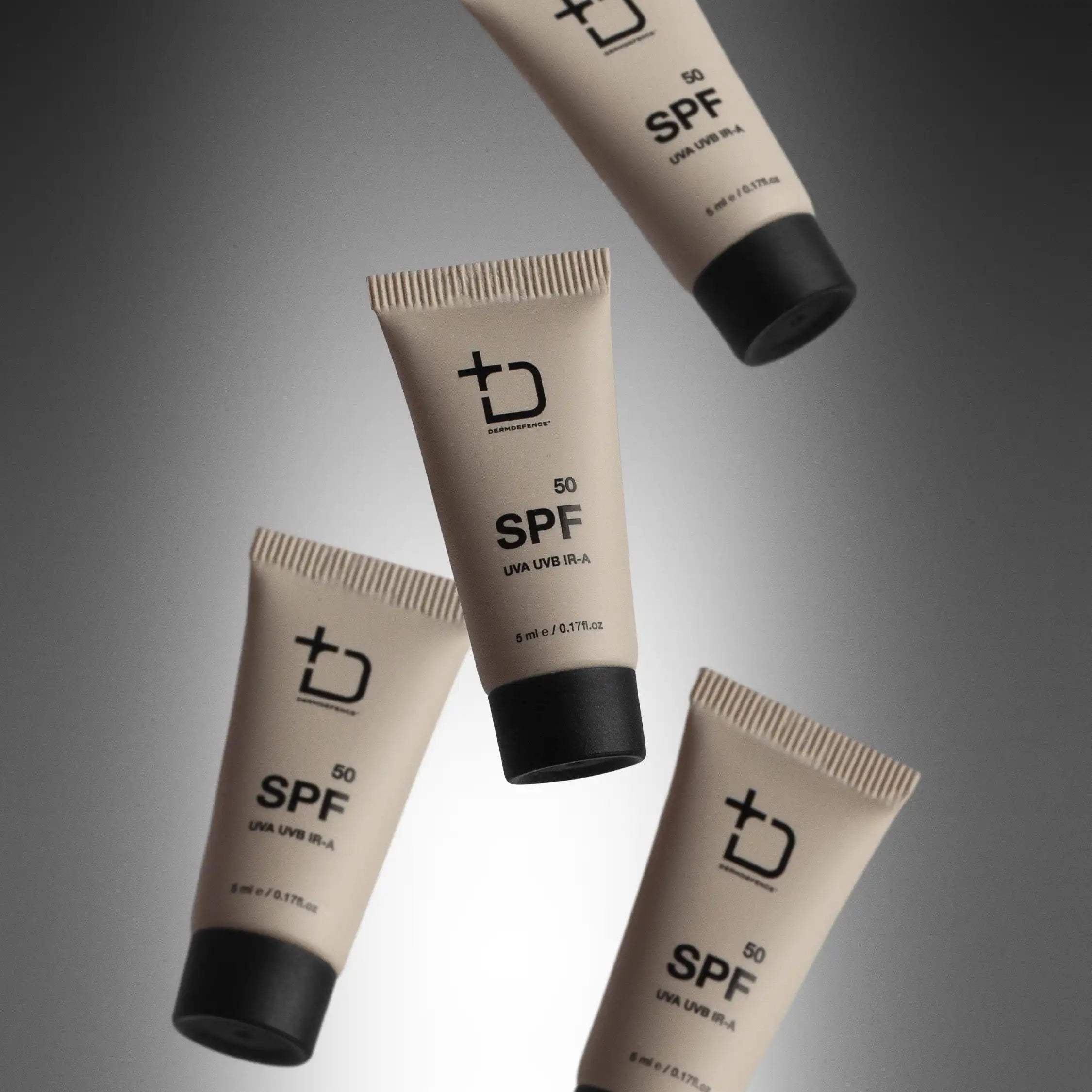




Please login to view the price
loginSIZE: 5 mL
Antioxidant
anti-aging
DNA repair
sun protection
Moisturizing
A pioneering sunscreen offering superior protection against the sun while preserving your skin's cellular and DNA health. The innovative formula exceeds standard UV protection, guarding against UVA, UVB, damaging infrared rays, and blue light. Offering wide-ranging protection bolsters your skin's restorative abilities, promoting a healthier and more resilient complexion.
Designed to be fragrance-free and anti-comedogenic, Dermdefence SPF 50 ensures no skin irritation or pore clogging, making it an excellent choice for those with skin conditions like Acne, Rosacea, or Eczema. Its lightweight, non-greasy texture provides easy application and rapid absorption, without leaving a white cast.
Dermdefence SPF 50 also serves as a primer, providing a smooth finish for easy makeup application and ensuring a flawless look all day. Dermdefence SPF 50 provides unparalleled sun protection that will shield your skin and nurture its unique needs, maintaining its health and radiance.
Coenzyme Q10
CoQ10 is a potent ingredient that offers comprehensive skin health and appearance benefits. Its role in energy production and its antioxidant and anti-aging properties make it invaluable for photoprotection, anti-aging, and overall skin vitality. Its incorporation into DermExcel sunscreen represents a holistic approach to skin health, addressing protective and restorative needs.
Physiological Impact
- Skin Barrier Enhancement: CoQ10 contributes to the strength and health of the skin barrier, improving its ability to retain moisture and protect against external irritants and pollutants.
- Skin Repair and Regeneration: It supports the skin's natural ability to repair itself and regenerate, maintaining a healthy, youthful appearance. This is particularly beneficial in mature skin, where natural levels of CoQ10 may be depleted.
Pharmacological Advantages
- Anti-Aging Effects: CoQ10's antioxidant properties contribute to its anti-aging effects. By reducing oxidative stress, it helps to minimize the visible signs of aging, such as wrinkles and fine lines.
- Photoprotection: It enhances the skin's defense against photoaging caused by exposure to UV rays. CoQ10 helps to mitigate the degradation of collagen and elastin, proteins essential for maintaining skin elasticity and firmness.
Biochemical Benefits
- Cellular Energy Production: CoQ10 plays a crucial role in the mitochondrial electron transport chain, which is essential for the production of ATP, the primary energy currency of the cell. This function is vital for maintaining the health and vitality of skin cells.
- Antioxidant Properties: It acts as a lipophilic antioxidant, neutralizing free radicals and preventing oxidative damage to cell membranes, proteins, and DNA. This is particularly important in the skin, which is frequently exposed to oxidative stress from environmental factors like UV radiation.
Vitamin E
The fat-soluble Vitamin E's benefits in maintaining skin health and appearance are well-acknowledged in both cosmetic and clinical dermatology. Comprising a group of eight compounds, including four tocopherols and four tocotrienols, Vitamin E is known for its role in protecting cell membranes from oxidative damage.
Vitamin E is celebrated in skincare for its ability to neutralize free radicals caused by environmental stressors such as UV radiation and pollution. These free radicals can lead to premature skin aging, making Vitamin E a valuable ingredient in anti-aging skincare products. Its antioxidant action helps to protect the skin from damage, reduce the appearance of wrinkles, and improve skin texture and tone.
Additionally, Vitamin E is known for its moisturizing benefits. It helps to strengthen the skin barrier, reduce moisture loss, and keep the skin hydrated and supple. This makes it especially beneficial for dry and damaged skin.
Vitamin E also has anti-inflammatory properties, making it beneficial in soothing and calming irritated skin. This has implications for conditions such as dermatitis and acne, where inflammation plays a key role.
Physiological Effects
- Antioxidant Protection: Vitamin E neutralizes harmful free radicals in the skin, preventing oxidative stress and damage caused by environmental factors like UV radiation and pollution.
- Moisturization: It has moisturizing properties, helping to improve skin hydration and alleviate dryness.
- Wound Healing: Vitamin E may assist in the skin's healing process, although its efficacy in wound healing is still a subject of research.
- Photoprotection: While not a sunscreen, it can provide some degree of photoprotection by strengthening the skin's defense against UV-induced damage.
- Anti-Inflammatory Effects: It helps reduce skin inflammation and is beneficial in managing conditions like eczema and psoriasis.
Managing Dermatological Conditions
- Skin Aging: Its antioxidant properties make it useful in anti-aging skincare products to protect against free radical damage and improve skin appearance.
- Dry Skin Conditions: Vitamin E's moisturizing effects are beneficial in treating dry skin and improving overall skin texture.
- Inflammatory Skin Diseases: It can be helpful in soothing inflammatory skin conditions like eczema and psoriasis.
- Sun Protection and Repair: Vitamin E is included in sunscreens and after-sun products for its ability to mitigate sun damage.
- Scar Treatment: Some studies suggest Vitamin E may help reduce the appearance of scars, although evidence is mixed.
References
- Thiele, J. J., Hsieh, S. N., & Ekanayake-Mudiyanselage, S. (1998). Vitamin E: Critical Review of Its Current Use in Cosmetic and Clinical Dermatology. Dermatologic Surgery, 24(7), 805–813.
- Ratz-Łyko, A., & Arct, J. (2016). Anti-inflammatory and anti-aging properties of active skin care ingredients. Journal of Clinical and Aesthetic Dermatology, 9(9), 36–40.
- Keen, M. A., & Hassan, I. (2016). Vitamin E in dermatology. Indian Dermatology Online Journal.
- Ekanayake-Mudiyanselage, S., & Thiele, J. (2007). Vitamin E in human skin: Organ-specific physiology and considerations for its use in dermatology. Molecular Aspects of Medicine.
- Nachbar, F., & Korting, H. C. (1995). The role of vitamin E in normal and damaged skin. Journal of Molecular Medicine.
Broad Spectrum Filters
Tinosorb® M and Tinosorb® S represent sophisticated advancements in sun protection technology.
Tinosorb® M
- Biochemical Action: A unique UV filter due to its ability to function through absorption, reflection, and scattering of UV rays.
- Physiological Impact: The triple-action mechanism of Tinosorb® M offers comprehensive sun protection. By mitigating the penetration of both UVA and UVB rays, it significantly reduces the risk of DNA damage, photoaging, and carcinogenesis. Its ability to remain on the skin's surface reduces systemic exposure, making it a safer option with minimal potential for irritation or allergic reactions.
Tinosorb® S
- Biochemical Action: A broad-spectrum UV filter with a molecular structure that effectively absorbs both UVA and UVB rays. Additionally, it enhances the photostability of other UV filters, making the sunscreen formulation more effective over time.
- Physiological Impact: By providing extensive UVA and UVB protection, Tinosorb® S plays a crucial role in preventing short-term sun damage like sunburn and long-term risks such as skin aging and skin cancer. Its photostability ensures sustained protection during sun exposure, and its compatibility with other UV filters means it can be used to formulate sunscreens that are both effective and suitable for sensitive skin.
Sunscreen
Using sunscreen is a fundamental aspect of skin care and preventive dermatology. It's essential for reducing the risk of skin cancers and photoaging and maintaining overall skin health in the face of constant exposure to UV radiation.
Sunscreen is a vital skincare product designed to protect the skin from the harmful effects of ultraviolet (UV) radiation from the sun. Two primary types of UV radiation affect the skin: UVA and UVB. UVA rays penetrate deep into the skin and are primarily responsible for aging and long-term skin damage, whereas UVB rays cause sunburn and play a key role in developing skin cancer.
Sunscreen products work by either absorbing, reflecting, or scattering sunlight. They contain chemical compounds that absorb UV radiation and convert it into a small amount of heat or physical compounds (like zinc oxide or titanium dioxide) that act as a physical barrier, reflecting UV light away from the skin.
The effectiveness of sunscreen is measured by its Sun Protection Factor (SPF). SPF indicates how well the sunscreen protects against UVB rays. For example, an SPF of 30 means it would take 30 times longer for your skin to burn than without sunscreen. However, it's important to note that no sunscreen can block 100% UV rays.
Regular use of sunscreen with an SPF of at least 30 can reduce the risk of skin cancer, prevent sunburn, and slow down the skin's aging process.
Managing Dermatological Conditions
- Prevention of Sunburn: Sunscreen protects the skin from UVB rays, which cause sunburn. This reduces the immediate risk of skin damage and discomfort.
- Skin Cancer Prevention: Regular use of sunscreen significantly lowers the risk of developing various types of skin cancer, especially melanoma, squamous cell carcinoma, and basal cell carcinoma.
- Prevention of Photoaging: Sunscreen also shields the skin from UVA rays, which penetrate deeper into the skin and are primarily responsible for photoaging, including wrinkles, leathery skin, and sunspots.
- Protection Against Photosensitivity: Sunscreen helps prevent flare-ups triggered by sun exposure for individuals with photosensitive skin conditions like lupus or rosacea.
- Hyperpigmentation and Melasma: It aids in preventing and managing hyperpigmentation and melasma, conditions exacerbated by sun exposure.
- General Skin Health: Sunscreen helps maintain overall skin health and integrity by protecting the skin from UV damage.
References
- Burnett, M. E., & Wang, S. Q. (2011). Current sunscreen controversies: a critical review. Photodermatology, Photoimmunology & Photomedicine.
- Green, A. C., et al. (2011). Reduced melanoma after regular sunscreen use: randomized trial follow-up. Journal of Clinical Oncology.
- Hughes, M. C. B., et al. (2013). Sunscreen and Prevention of Skin Aging: A Randomized Trial. Annals of Internal Medicine.
SHIPPING
- Shipping Guarantee: Guiding you to healthy skin isn’t only about our products; it's also about getting them to you as swiftly as the science behind them. That's why Dermal Health offers a shipping guarantee you can rely on.
- Where We Ship From: Orders are dispatched from our facilities in Pretoria.
- Who We Ship With: We trust only well-known, popular, and dependable courier services with your packages.
- When You'll Get It: Expect confident skin soon! Shipping addresses in Pretoria and Johannesburg will enjoy delivery from same-day to 2 business days. Shipping addresses further from Pretoria may expect delivery within 1-4 business days, depending on the service you select during checkout. Your estimated delivery date will reflect during checkout so that you can mark your calendar.
- Tracking Your Order: Eager to start your DermExcel journey? We don't blame you! You'll receive a tracking number after you place your order so that you can follow your package.
For any shipping inquiries, our customer service team is ready to assist.
SECURE PAYMENT
Dermal Health Science 30-Day Confidence Guarantee: We are passionate about guiding you to healthy skin through medical science. We believe in the quality and effectiveness of our products so much that we offer a 30-Day Confidence Guarantee. If you're unsatisfied with your purchase, simply return it within 30 days for a full refund.
Healthy Skin Is Not Complicated and neither is our return policy. Please visit our detailed return policy or contact our friendly customer service team for more information.
Feel as confident in us as we want you to feel in your skin.
Dermdefence SPF 50: Travel Size
product benefits
No white cast & Lightweight
Features a lightweight, non-greasy texture for easy application and swift absorption without leaving a white cast.
Anti-Aging
It prevents the formation of UV radiation-induced free radicals and reduces UV-caused redness, effectively combating signs of aging.
DNA Damage Protection
Guards against harmful UVA, UVB, infrared rays, and blue light, protecting your skin's cellular and DNA integrity.
Makeup Primer
An effective primer that offers a smooth base for effortless makeup application, ensuring a flawless look all day.
Non-Irritating
It is a fragrance-free and anti-comedogenic formula that ensures no skin irritation or pore clogging, making it suitable for sensitive skin.
Hydrating
This formula provides hydration, helping to maintain the skin's moisture balance, leaving it soft and supple throughout the day.
Indications for Dermdefence SPF 50: Travel Size
Infrared & Blue light protection
UVA and UVB protection
Aging Skin
Dry Skin
dermdefence
mode of action
UV Rays Protection
UVA rays are mainly linked to long-term skin damage, such as wrinkles, but they are also thought to play a role in some skin cancers. UVB rays have slightly more energy than UVA rays. They can directly damage the DNA in skin cells and are the primary rays that cause sunburns.
- Uvinul® MC 80 and Uvinul® T 150 protect against UVA.
- Neo Heliopan® 357 protects against UVA - It is the most important UVA filter in the world.
- Tinosorb® S, Tinosorb® M and Titanium Dioxide offers highly effective, broad-spectrum UVA and UVB protection.
Blue Light Protection
Excessive daily blue light exposure (computers & phones) can trigger inflammation and pigmentation.
- Vitamin E (tocopherol) protects against blue-light-induced oxidation.
- InfraGuard protects essential skin cells from high-energy visible (HEV) light, also known as blue light. Blue light is emitted by mobile devices and computer screens and generates reactive oxygen species (ROS) in the skin.
Pollution Protection
Air pollutants induce severe alterations of the normal functions of lipids, DNA, and proteins in the human skin via oxidative damage, leading to extrinsic skin aging, inflammatory or allergic conditions such as contact dermatitis, atopic dermatitis, psoriasis, acne, and skin cancer.
- Antioxidants prevent DNA damage through antioxidant activity.
- Glycerin and Sorbitol defend the skin against harmful polluting agents and protect the cells' DNA by inhibiting penetration of pollutants on the skin, restoring skin barrier function, and reducing inflammation.
Infrared Radiation Protection
Intense infrared radiation, or heat, is detrimental to the skin. Heat increases the production of melanocyte pigment within the skin. It can, therefore, worsen melasma and other skin pigmentation concerns.
Studies demonstrate that IR and heat exposure induce cutaneous angiogenesis, and inflammatory cellular infiltration disrupts the dermal extracellular matrix by inducing matrix metalloproteinases and altering dermal structural proteins, thereby adding to premature skin aging.
- Coenzyme Q-10 protects against infrared A radiation. It’s a regenerative antioxidant that reduces oxidation, wrinkle depth, and oxidative DNA damage. It's antioxidant and coenzyme effects also help prevent cell death.
- Glycerin and Sorbitol defend the skin against harmful polluting agents and protect the cells' DNA by inhibiting penetration of pollutants on the skin, restoring skin barrier function, and reducing inflammation.
sun protection
Dermdefence SPF 50: Travel Size
specifications
| protection | value |
|---|---|
| SPF - Sun Protection Factor | 50 |
| UVA - Ultraviolet A | 95% (protection against at least 95% of UVA rays) |
| UVA Balance | > 33% |
| UVA-PF | > 20 |
| PA-UVA | PA ++++ |
| PPD | > 20 |
| UVB - Ultraviolet B | 98.18% (protection against at least 98.18% of UVB rays) |
| Critical Wavelength Protection | > 378nm |
Testimonials
I absolutely love my products and cant go a day without them
Dermatint
Dermatint
Just started using the SPF cream. A small amount goes far, does not make your skin oily or greasy. It vanishes quite quickly but find it does not spread easily on the face.
